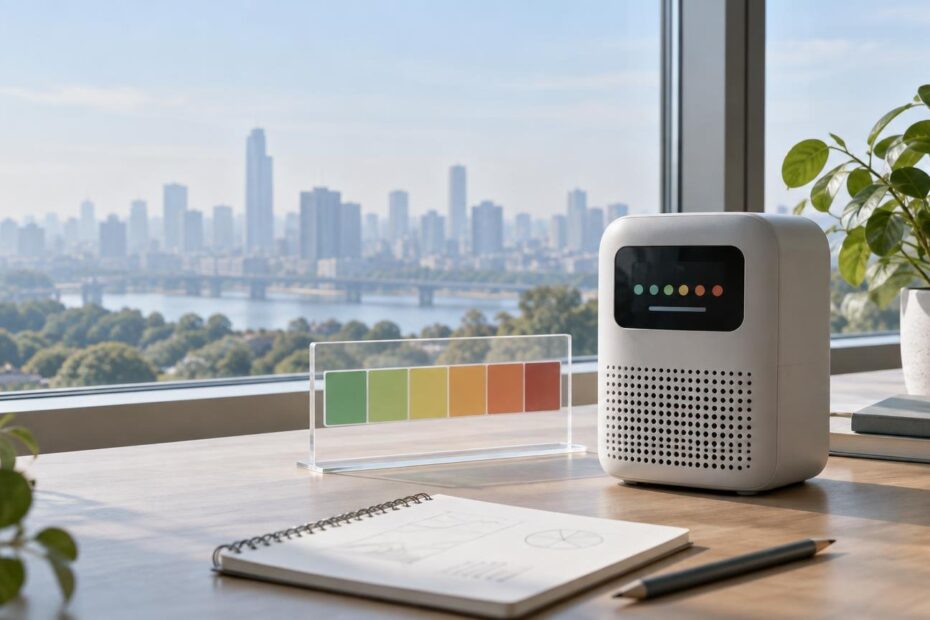
PM2.5 vs AQI: The Measurement and the Communication Scale Are Not the Same Thing
PM2.5 is a pollutant concentration, while AQI is a health-communication index calculated from pollution data. Here is how the U.S. system connects them.
PM2.5 is a pollutant concentration, while AQI is a health-communication index calculated from pollution data. Here is how the U.S. system connects them.

Scale weight cannot show which tissues changed. Learn how to interpret fat mass, lean mass, hydration, DXA, BIA, strength and function in weight-loss research.

Public-health dashboards are time-stamped views of evolving records. Learn how provisional data, reporting lag, backfill, date fields, and revisions affect what you see.

Small-area health maps can turn a few events into an apparent hotspot. Learn how sparse data, age adjustment, smoothing, geocoding, privacy controls, and ecological fallacy affect interpretation.

Wearable HRV can be useful for tracking personal trends, but the result depends on how pulse intervals are sensed, filtered, summarized, and collected.

Nutrition findings can look contradictory when studies measure diet differently, compare different replacements, or examine different outcomes. Here is how to judge what a result really means.

A practical, research-use-only framework for checking peptide identity, purity, content, analytical methods, batch documentation, storage support, and lot traceability.

Peer review adds scrutiny, but it does not guarantee that a medical finding is correct. Use this practical framework to assess preprints, journal articles, abstracts, and health news.

Preregistration creates a time-stamped record of a study’s plans, helping readers distinguish prespecified tests from later exploration. Here is how to evaluate it without treating it as a certificate of quality.

A hazard ratio compares event rates among people still event-free and under observation. Learn why it is not an absolute risk reduction and how survival curves, censoring, and proportional hazards affect its meaning.

Calibration connects a sensor’s readings to known reference values under specified conditions. Validation asks whether the complete device performs adequately for its intended users, setting, metric, and health-related purpose.
TLDR A personal health record binder can keep medication lists, allergies, provider contacts, major procedures, immunizations, insurance information, emergency contacts, and important test information in one place. Keep it updated, protect private information, and use…